Creating trusted AI directly into OCTO
Put AI to work directly inside your orchestrated business processes, not beside them.
Easily switch, test, and compare models.
Put AI to work directly inside your orchestrated business processes, not beside them.
Use different AI providers or in-house models in the same process and choose the best fit for each task.
Apply guardrails, validation, and human oversight to keep execution accurate, governed, and production-ready.
Adapt quickly to new technologies, avoid lock-in, and upgrade your AI approach without redesigning the whole process.
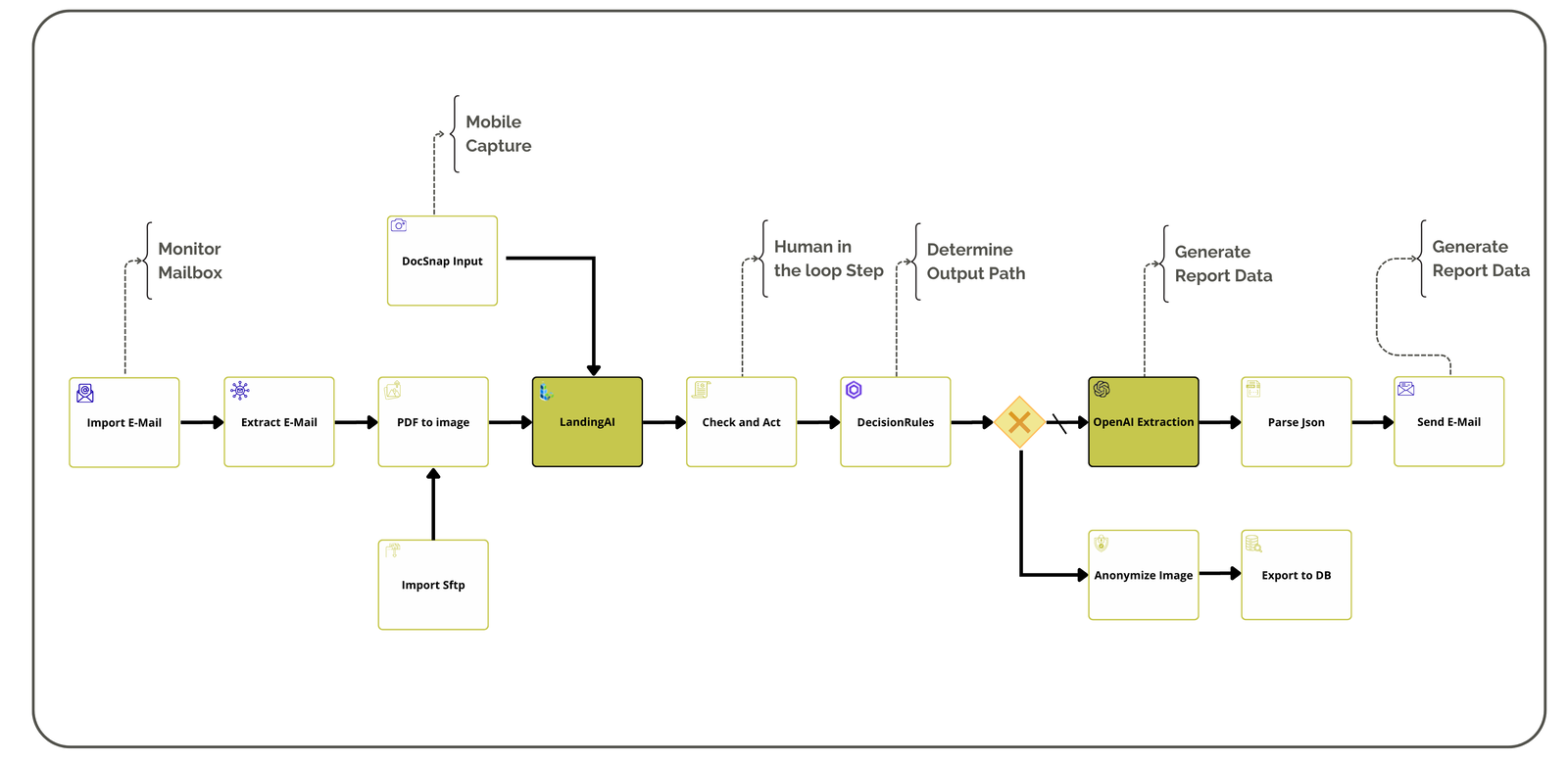
AI can deliver powerful results, but business processes also demand accuracy, traceability, and control. OCTOai supports this by validating AI-generated outputs against rules, master data, and tailored checks. When confidence is too low or human judgment is needed, users can review, guide, and refine results through an intuitive interface.
Test OCTo
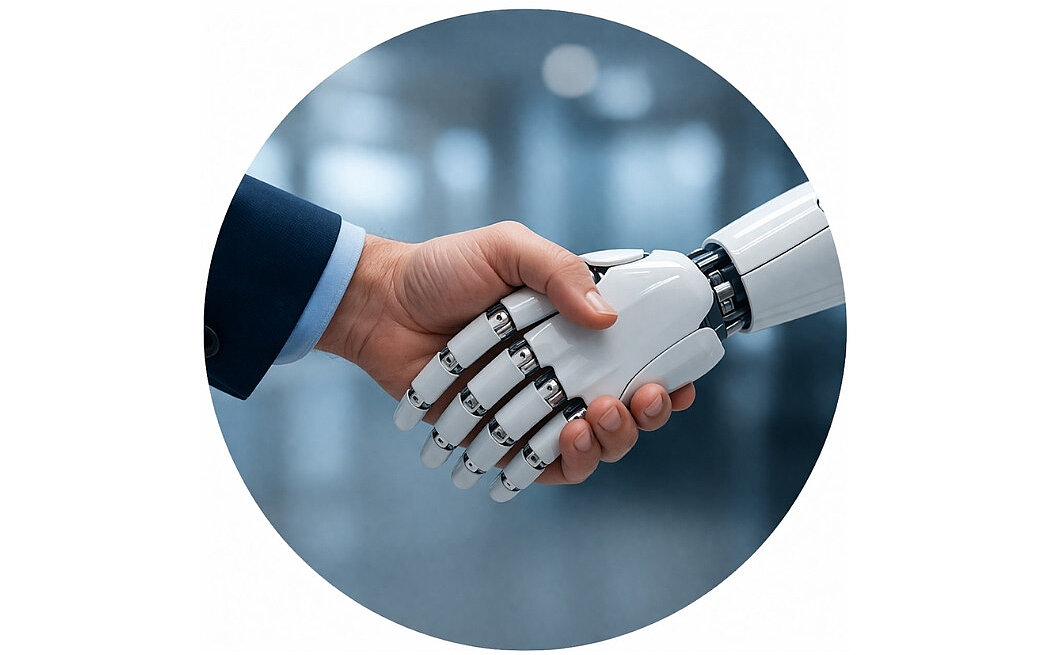
OCTOai helps you turn AI into something your business can actually use at scale. By embedding AI into orchestrated processes, making services easy to change, and keeping validation and human oversight built in, OCTOai gives you a practical path to faster adoption, safer execution, and stronger business outcomes.
With OCTOai, you can:
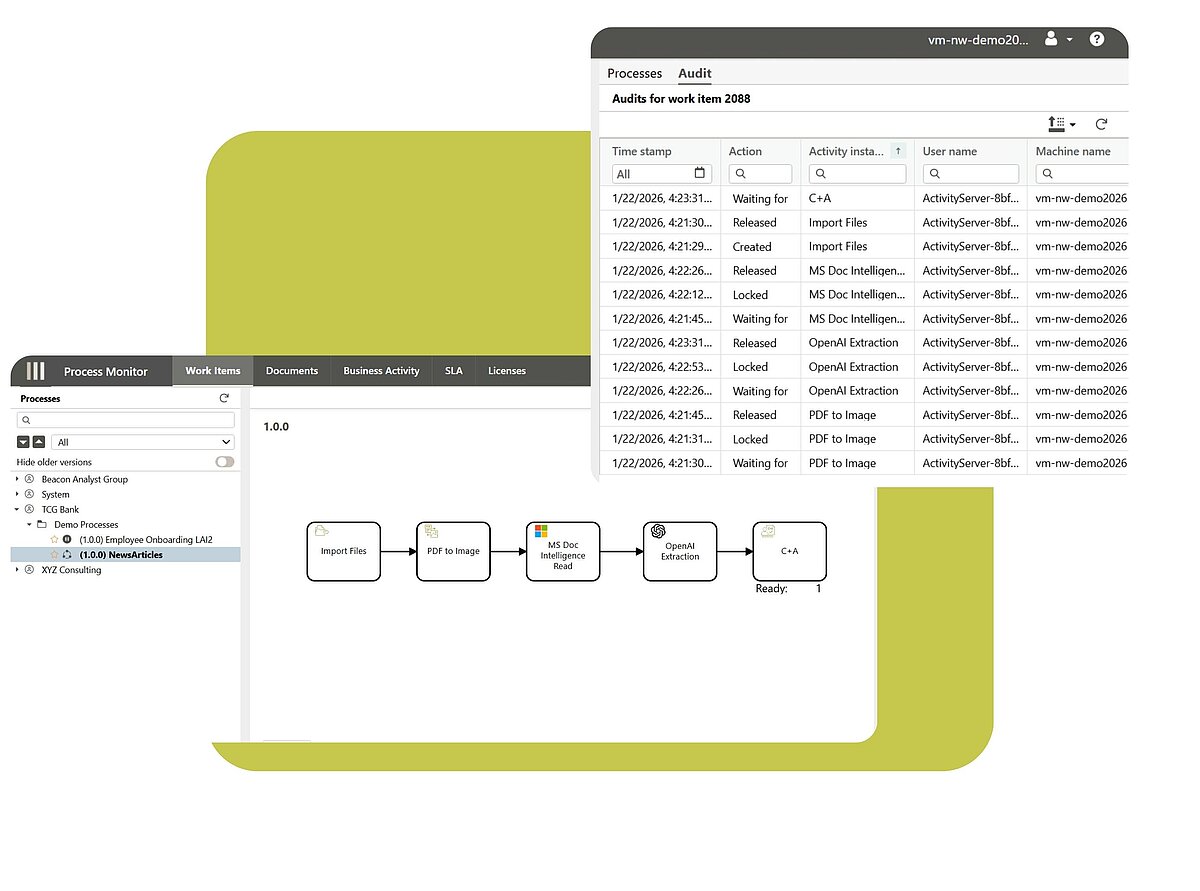
OCTOagent is an OCTO platform competency designed for connected processing — connecting people, systems, and services with your centrally governed processes and task automations. It gives you easy access to centralized RPA through a streamlined user experience, while maintaining controlled execution and governance.
OCTOidp, also known as DocProStar, is an OCTO platform competency for documents and dossiers, providing advanced document and media handling for accurate, automation-ready inputs. It supports consistent processing across sources and formats while improving data accuracy and context by connecting extraction with existing data sources.
AI orchestration is the coordinated use of AI models, business rules, data, systems, and people within a business process. It ensures that AI is not used as an isolated tool, but is connected to the right tasks, validation steps, decisions, and follow-up actions.
OCTO supports AI orchestration through OCTOai, the AI orchestration competency of the OCTO platform. It helps organizations apply AI safely and effectively across end-to-end workflows. AI outputs can be checked, routed, reviewed by people when needed, and integrated with existing business systems to deliver reliable business outcomes.
OCTO supports AI orchestration in business processes by connecting AI capabilities with workflows, business rules, human validation, and enterprise systems. This allows organizations to use AI for tasks such as classification, extraction, summarization, decision support, and content generation within controlled end-to-end processes. OCTO helps ensure that AI outputs are validated, monitored, and integrated into real business operations rather than used in isolation.
OCTO helps organizations use AI safely by embedding AI into controlled workflows. AI-generated outputs can be validated against business rules, reference data, and process requirements, with human review added whenever confidence is low, exceptions occur, or business judgment is required.
Yes. OCTO can connect with multiple AI providers, specialist AI services, and in-house models. This gives organizations flexibility to select the most appropriate AI capability for each process task and adapt as models, providers, or business requirements change.
OCTO helps reduce dependency on a single AI provider by allowing organizations to connect, test, compare, replace, and upgrade AI models within existing workflows. This means teams can evolve their AI strategy without redesigning the entire business process.
OCTO supports human-in-the-loop process design. Human participants can review, approve, correct, enrich, or override AI outputs when needed, helping organizations maintain accountability, quality, and operational control.
Workflow automation tools typically route tasks and manage predefined process steps. The AI orchestration in OCTO goes further by coordinating AI models, data, business rules, systems, and people within those workflows.
OCTOai allows AI to interpret information, support decisions, generate content, or recommend actions, while workflow controls ensure the results are validated, routed, monitored, and reviewed by people when needed.
Organizations use AI orchestration in OCTO to move from isolated AI experiments to secure, scalable business execution. OCTO combines AI with process orchestration, document processing, human participation, business rules, and enterprise integration, helping teams adopt AI faster while keeping operations governed, transparent, and adaptable.
AI orchestration is especially valuable for processes that involve large volumes of documents, emails, unstructured data, decisions, or exceptions. Common use cases include claims intake, invoice processing, customer onboarding, digital mailroom, email triage, case management, compliance checks, customer service, and back-office operations.
In OCTO, AI orchestration helps connect AI-supported tasks with business rules, human validation, and enterprise systems so these processes can be automated safely from intake through to outcome.