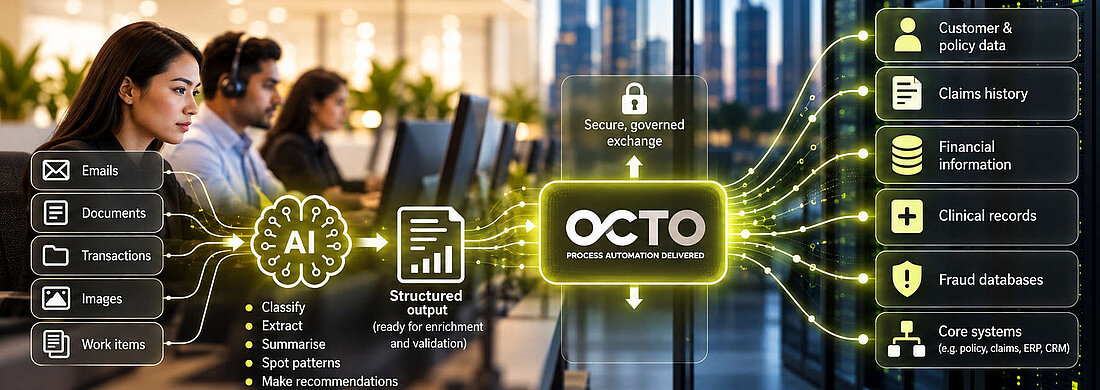
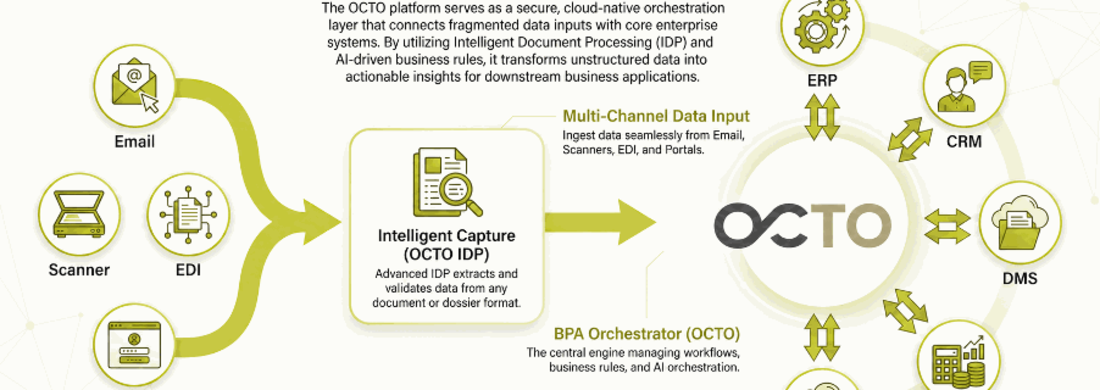
Hybrid BPO combines AI-powered document processing with human expertise to change how outsourcing works. AI now extracts, classifies, and analyzes documents faster than ever, but limited access to trusted enterprise data often stops end-to-end automation. This article explores how secure orchestration closes that last-mile gap, so BPO providers can connect intelligent processes to customer systems while protecting data sovereignty, security, and governance. Frank Volckmar, Managing Director, CANZ, TCG Process Pty Ltd, explains how the OCTO orchestration platform from TCG Process enables governed data exchange, validation, business rules, and human-in-the-loop decisions. The result is more straight-through processing, better accuracy, greater efficiency, and stronger partnerships between BPO providers and their customers.
Sergey Borovoy, Cloud Services Director at TCG Process, explores the case for delivering business process automation in the cloud. This article compares cloud and on-premises deployment across speed, scaling, security, compliance, and hidden costs. It explains how a cloud-delivered orchestration layer connects existing systems, how organizations can keep control of data residency, and what changes when infrastructure stops being the bottleneck. It closes with customer results from ERS and Barber's and how OCTO as a Service supports the move.
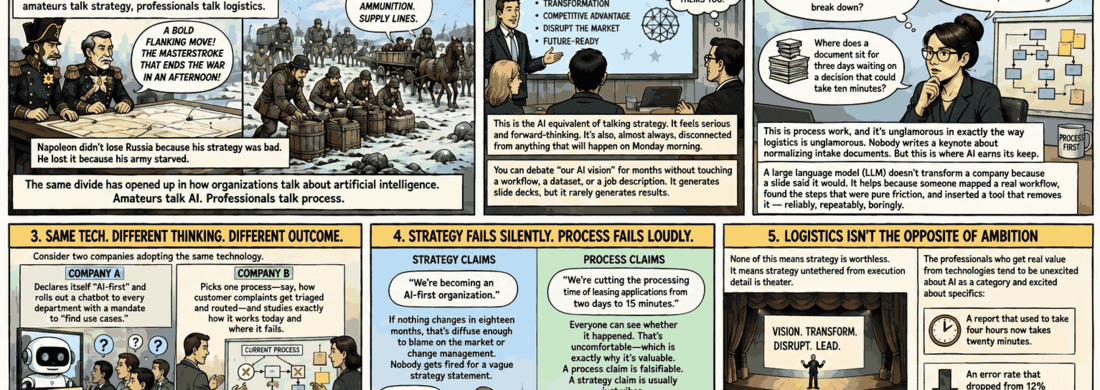
Organizations often spend too much time debating AI strategy and too little time improving the processes where AI can create measurable value. This article argues that successful AI adoption starts with specific workflows, clear ownership, measurable failure points, and practical execution. Rather than pursuing vague “AI-first” ambitions, companies should identify operational friction, redesign processes, and apply AI where it can reliably reduce time, errors, and unnecessary work.
Enterprise AI becomes operational when it is embedded in a governed, measurable business process. Neil Walker, TCG Process Head of Product, explains how process orchestration with OCTO connects AI, data, rules, systems and human work to turn isolated experiments into robust, explainable automation that delivers measurable business value.
See how enterprises can orchestrate multiple AI models with OCTO to balance cost, performance, governance and flexibility without rebuilding business processes.
Enterprises using AI face growing risks from shadow AI, data exposure, and limited oversight. Learn why AI governance now belongs inside process automation, where business-critical work can be secure, auditable, and accountable.
Most organizations still manage email the way they did a decade ago: manually, inconsistently, and at significant cost. The Email Triage Accelerator, built on OCTO, the no-code process orchestration platform from TCG Process, changes that. Sitting on top of your existing Microsoft 365 environment, it automatically classifies, prioritizes, and routes inbound emails and attachments based on your business rules, reducing human errors and rework by more than 90%. Every step is logged and reportable, implementation takes around five days, and because it runs on OCTO, email triage becomes the natural entry point to enterprise input management.
Documents, systems, AI, and teams often create fragmented and complex workflows.
OCTO brings them together in one platform to orchestrate and automate end-to-end processes with these 3 core competencies.
Should insurers wait for Guidewire or Duck Creek to embed AI, or act now? Learn why leading insurers are deploying process orchestration to integrate AI safely — without replacing core systems.
Most organizations have solid systems of record. The problem is asking them to do work they were never designed for. This article explores why introducing a flexible process orchestration layer, rather than overloading core systems, is the key to unlocking genuine operational efficiency.